


Education of Ukrainian Children in European Countries: Findings of the Six Nations Joint Audit
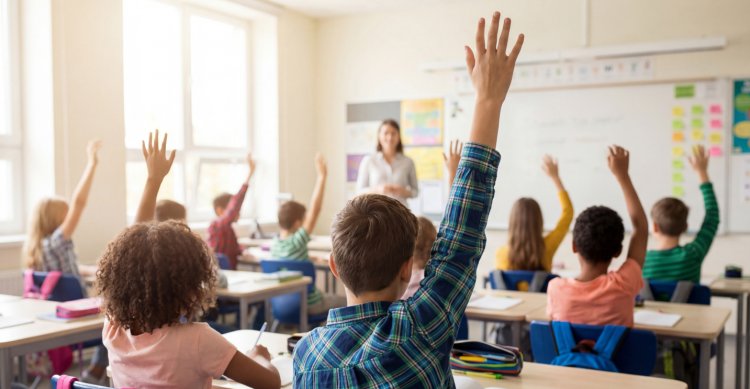
Since the beginning of the full-scale war, Ukrainian children who moved to European countries have had the opportunity to continue their education in local schools or remotely through Ukrainian educational institutions. As of 2025, more than 254,000 Ukrainian children were attending schools in Poland, Lithuania, Slovakia, the Czech Republic, and the state of Hesse (Germany).
The educational systems of these countries were able to adapt quickly to the new conditions. At the same time, the approaches to the Ukrainian children’s adaptation – including linguistic and psycho-pedagogical support, as well as the maintenance of ties with the Ukrainian education system – varied from country to country; furthermore, no specific mechanism was established to track children who are not enrolled in any educational system.
This is stated in the Joint Report on the results of a coordinated audit “Implementation of the Right to Education for Ukrainian Children in the EU Schools”. The decision to approve the signing of this report was adopted by the Accounting Chamber during its meeting on September 29 by the Chairwoman Olha Pishchanska. She also presented the Joint Report.
The audit covered the period from 2022 to 2025 and was conducted by the supreme audit institutions of Ukraine, Poland, Lithuania, Slovakia, and the Czech Republic, as well as the Hesse Court of Audit (Germany). The Supreme Audit Office of Poland served as the coordinator of the audit.
The objective of the coordinated audit is to verify whether the right of Ukrainian children to education is being properly ensured in the countries participating in the audit, as well as through distance learning in Ukraine.
Registration of Ukrainian children abroad
One of the challenges of the audit is determining the actual number of Ukrainian children abroad receiving education. The Ministry of Education and Science of Ukraine obtains data on children who are outside Ukraine but continue their studies in Ukrainian school through the Automated Information Complex for Educational Management (AICEM).
At the same time, no mechanism has been established to track children abroad who are not enrolled in either the Ukrainian or a foreign education system, nor has a registry of Ukrainian-language educational centres abroad been created.
Between 2022 and 2025, the Ministry of Education and Science of Ukraine did not enter into any international agreements regarding the organization of education for Ukrainian children abroad or the exchange of educational data concerning school-aged children residing outside Ukraine. While the Ministry engaged in international cooperation through various formats, it did not systematically track the outcomes of these activities.
At the time the audit was concluded, enrollment in local schools in Poland, Lithuania, Slovakia, the Czech Republic, and the Hesse Court of Audit (Germany) was mandatory for all arriving Ukrainian students. This reduces the risk of students falling outside the educational systems of any of these states. However, official statistics includes the students who are already enrolled in education.
Linguistic, Psychological and Pedagogical Support
For children attending schools in their host countries, one of the key challenges was adapting to a new educational environment. In the Czech Republic, the state of Hesse, Lithuania, Slovakia, and Poland, preparatory classes, intensive language courses, and other forms of support were implemented. Ukrainian-speaking teachers, teaching assistants, psychologists, and other specialists were involved in working with the children. International and non-governmental organizations also played a significant role in providing support.
To facilitate their integration into the new environment, schoolchildren were systematically enrolled in adaptation groups and interest-based clubs.
Maintaining Connection with Ukrainian Education
A separate area of research focused on maintaining children’s connection with the Ukrainian language and education:
– In the Czech Republic, Ukrainian language educational projects were implemented for Ukrainian schoolchildren; additionally, a solution was found to condense the remote Ukrainian curriculum into specific subjects, thereby reducing the children's workload.
– In the 2024/2025 academic year, a pilot project "Ukrainian as a Second Foreign Language" was launched in Hesse.
– In Lithuania, there were five private Ukrainian schools where 37% of the children who arrived in the country were educated, while another 31% received their education in public schools in accordance with the Ukrainian curriculum.
- Starting from the 2025/2026 academic year, Polish legislation allows graduates, who are citizens of Ukraine or Poland, to take a final examination in Ukrainian as foreign language.
– In Slovakia, it is possible to attend a school with Ukrainian as the instruction language in the city of Prešov.
Conclusions and Recommendations
The joint audit revealed that, between 2022 and 2025, host countries focused on integrating Ukrainian children into national school systems and fostering their interaction with peers. Many of the operational measures implemented following the start of the full-scale war subsequently became systemic in nature.
Among the most effective practices facilitating the integration of Ukrainian children into the educational systems of other countries, the auditors jointly identified the following: the introduction of mandatory attendance at local schools; the involvement of intercultural assistants and Ukrainian speakers in school settings; the provision of additional classes in the host country’s language; and offering Ukrainian children the opportunity to study Ukrainian and take examination in it as part of their state examinations.
According to the auditors' conclusions, future educational policy should be aimed at equalizing educational opportunities and creating conditions that meet the needs and aspirations of Ukrainian students.
It is recommended that education authorities in host countries:
- monitor the situation of Ukrainian students regarding compliance with compulsory education requirements, to prevent their exclusion from the educational process and the termination of their studies;
- provide appropriate psychological and pedagogical support, intensive study of the host country’s language, and the general opportunity to study the Ukrainian language as a second foreign language;
- facilitate the enhancement of the Ukrainian teachers’ capacity to teach their native language as a foreign language abroad;
- ensure the involvement of intercultural assistants in schools attended by Ukrainian students, to facilitate their intercultural integration.
"Implementing these recommendations will help further align the educational systems of host countries with the principles of the UN Convention on the Rights of the Child – a standard that entails moving beyond the mere enrollment of a child in school toward their active and supported integration into the educational environment. This involves the systematic development of targeted language programs, strengthening the role of intercultural assistants, and improving national mechanisms for monitoring compliance with compulsory school attendance requirements," concluded Olha Pishchanska, Chairwoman of the Accounting Chamber.
It should also be noted that the number of Ukrainian students who are abroad but studying online in Ukraine has decreased significantly in recent years. While there were nearly 520,000 such students in 2022, the figure stood at 316,000 as of September 1, 2025, and at just 272,000 as of September 1 of this year. This indicates an increasing adaptation of Ukrainian students to the educational systems of their host countries, while simultaneously creating new challenges for European states.
Supplementary.
Report on the results of a national compliance audit: "Ensuring Ukrainian children in European countries receive a Ukrainian school education."
Press Release: https://rp.gov.ua/yak-derzava-zabezpecuje-ukrayinskim-dityam-za-kordonom-dostup-do-osviti-rezultati-auditu-raxunkovoyi-palati