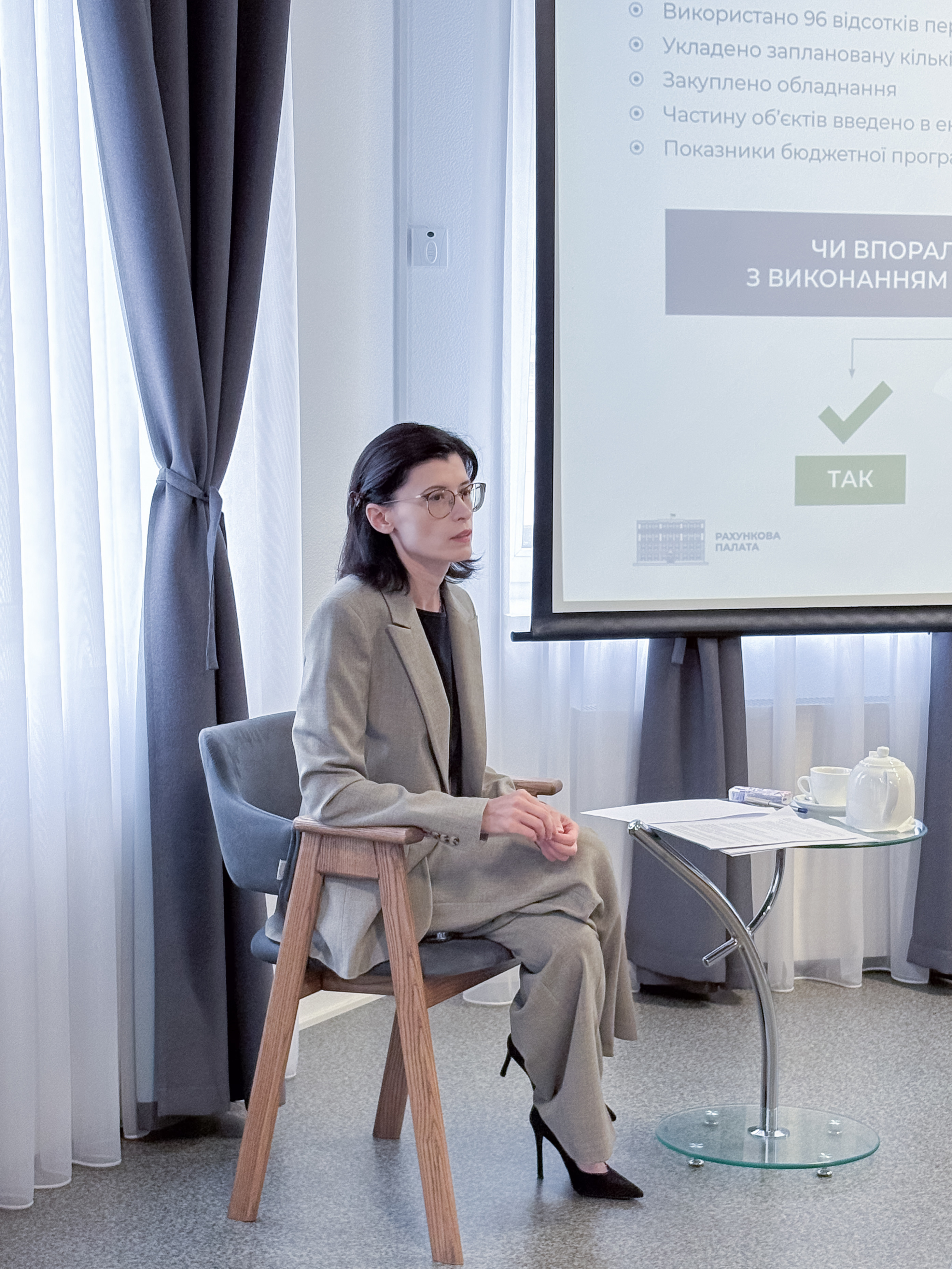
About the Accounting Chamber of Ukraine for Future Ministers: Olha Pishchanska Delivers a Lecture at the Kyiv School of Public Administration

Olha Pishchanska, Chairwoman of the Accounting Chamber of Ukraine, discussed how the Accounting Chamber interacts with executive authorities, the role its audits play in public administration, and how audit findings can influence subsequent decisions during a meeting with participants of the “School of Ministers” programme at the Serhiy Nyzhnyy Kyiv School of Public Administration on 19 September.
The lecture, “Between Decision and Result: What the Accounting Chamber Sees,” focused on the lifecycle of a government decision – from its conception, planning and financing to implementation, outcomes and independent assessment by auditors.
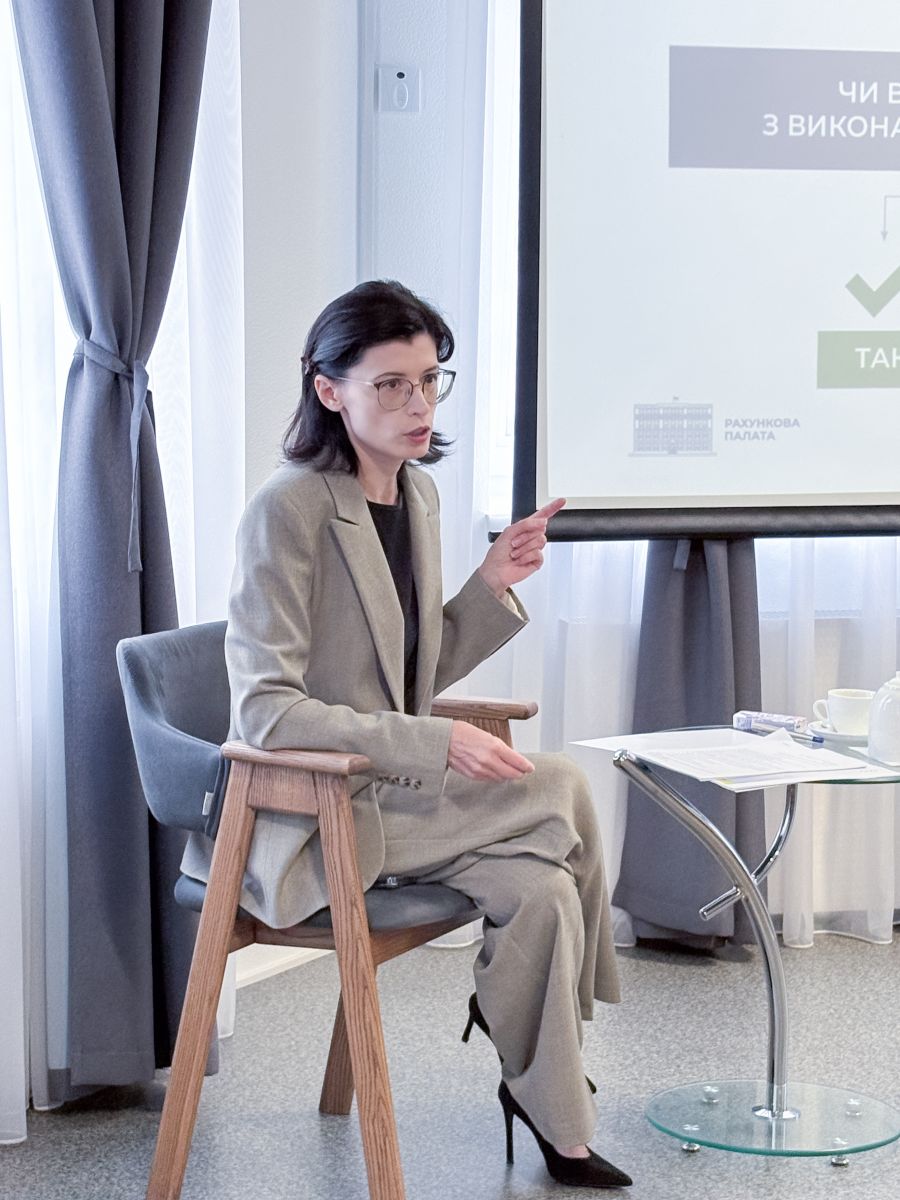
Twenty-six participants took part in the training.
During the lecture, Olha Pishchanska emphasised that the results of state external financial control are important for the Verkhovna Rada of Ukraine, executive authorities and society alike. Audits provide independent information on the reliability of financial statements, the causes of inefficiencies or delays in the implementation of government programmes, the use of public resources, and opportunities to improve management decisions.
The Chairwoman of the Accounting Chamber also highlighted the requirements that apply to the audit institution itself, including its independence, compliance with international professional standards, the quality of its internal processes and transparency of its work.

“Transparency and regular reporting are both among the Accounting Chamber’s responsibilities and important tools in our work. We work for the state and produce information that is used to plan the use of public funds, which are ultimately citizens’ money. Society has the right to know how these funds are used, especially when they are not used properly. That is why full transparency in our audits is important to us,” Olha Pishchanska noted.
Using specific examples, participants examined the differences between the three main types of audit: financial audit, compliance audit and performance audit.

In particular, the discussion covered the results of financial audits of the Ministry of Health of Ukraine and the State Property Fund of Ukraine; the performance audit of the development of innovations and technologies for defence needs under martial law; and the compliance audit in the area of recovery of settlements affected by Russian aggression.
Using these audits as examples, Olha Pishchanska demonstrated how accounting errors, shortcomings in planning, unclear allocation of responsibilities, or non-compliance with established requirements can affect the outcomes of government decisions.
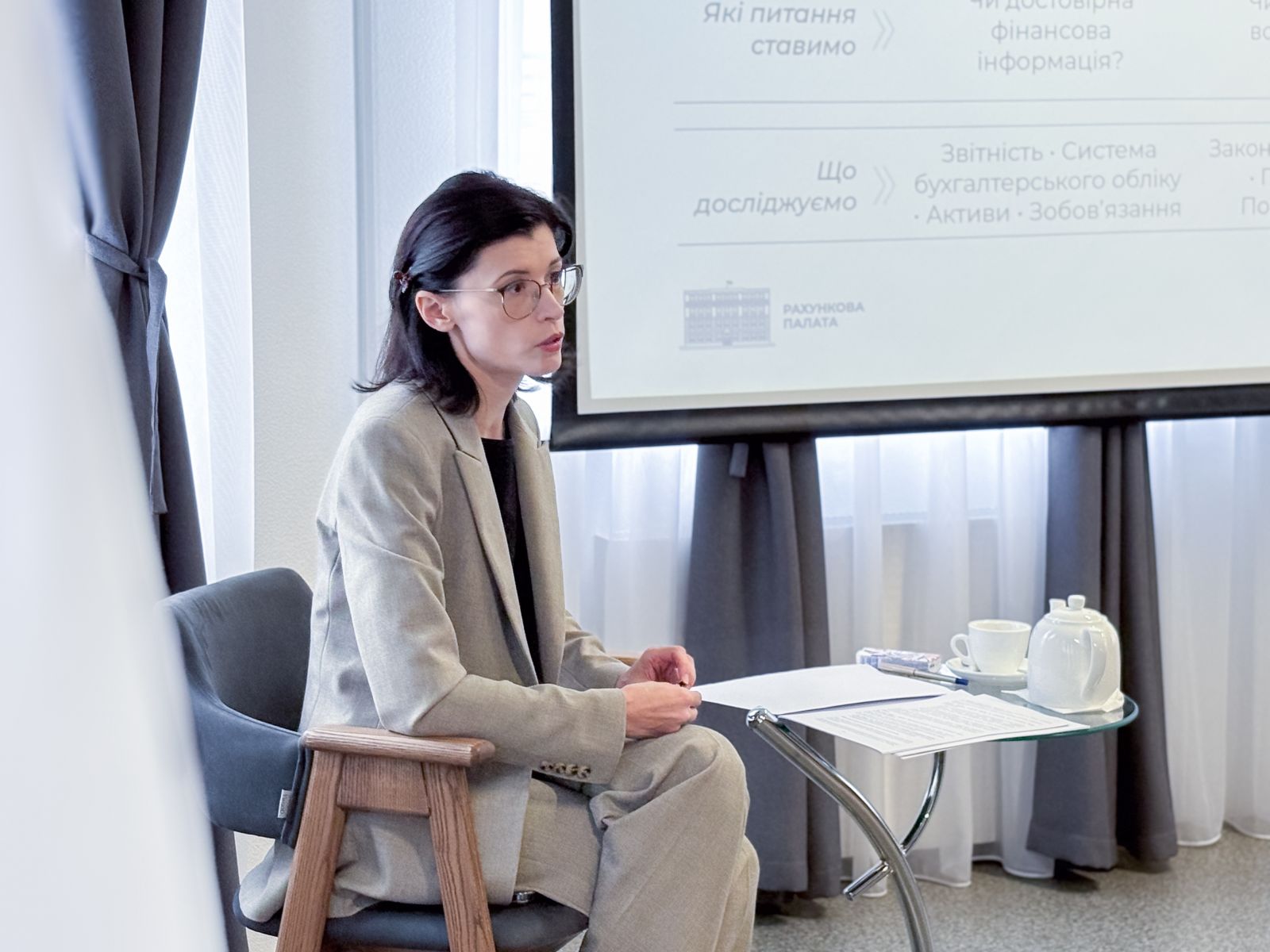
Participants actively engaged in the discussion and asked questions about the planning of the Accounting Chamber’s work, whether ministries can draw the Chamber’s attention to specific high-risk areas for possible audit, legislative changes resulting from audit findings, and ways to improve the effectiveness of audit work.
At the end of the meeting, Olha Pishchanska wished the programme participants success in their future work and in achieving their goals.