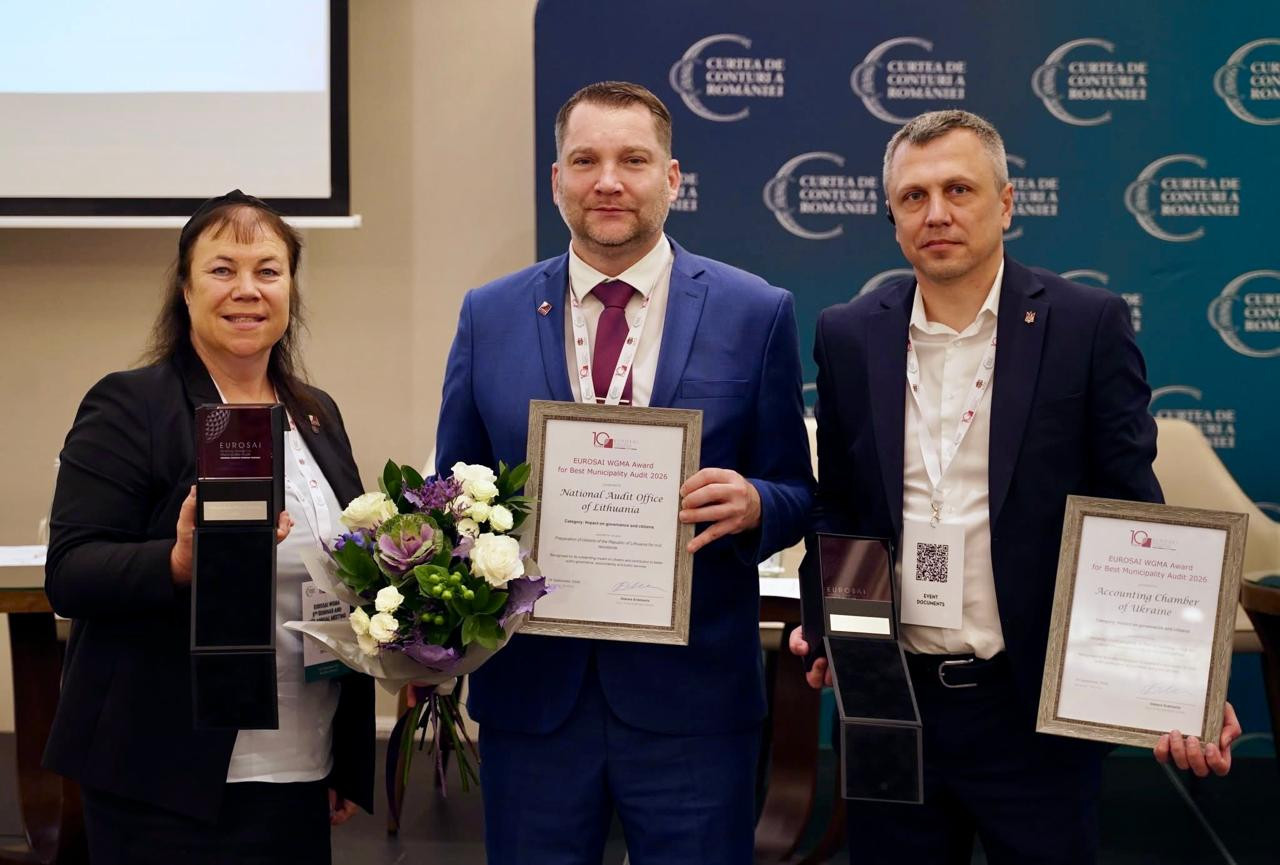
The Accounting Chamber received an award from the EUROSAI WGMA for the best audit, which influences governance and citizens.
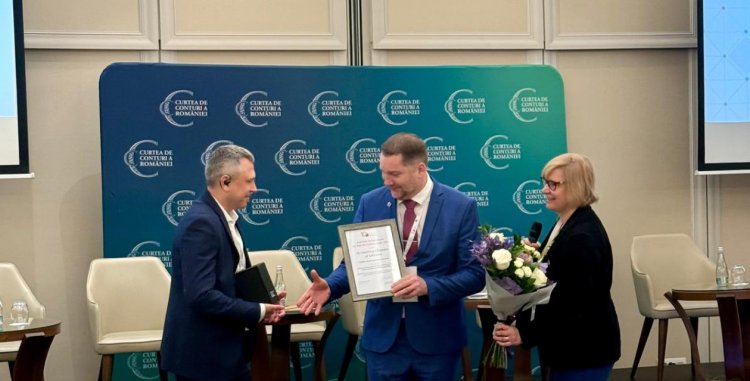
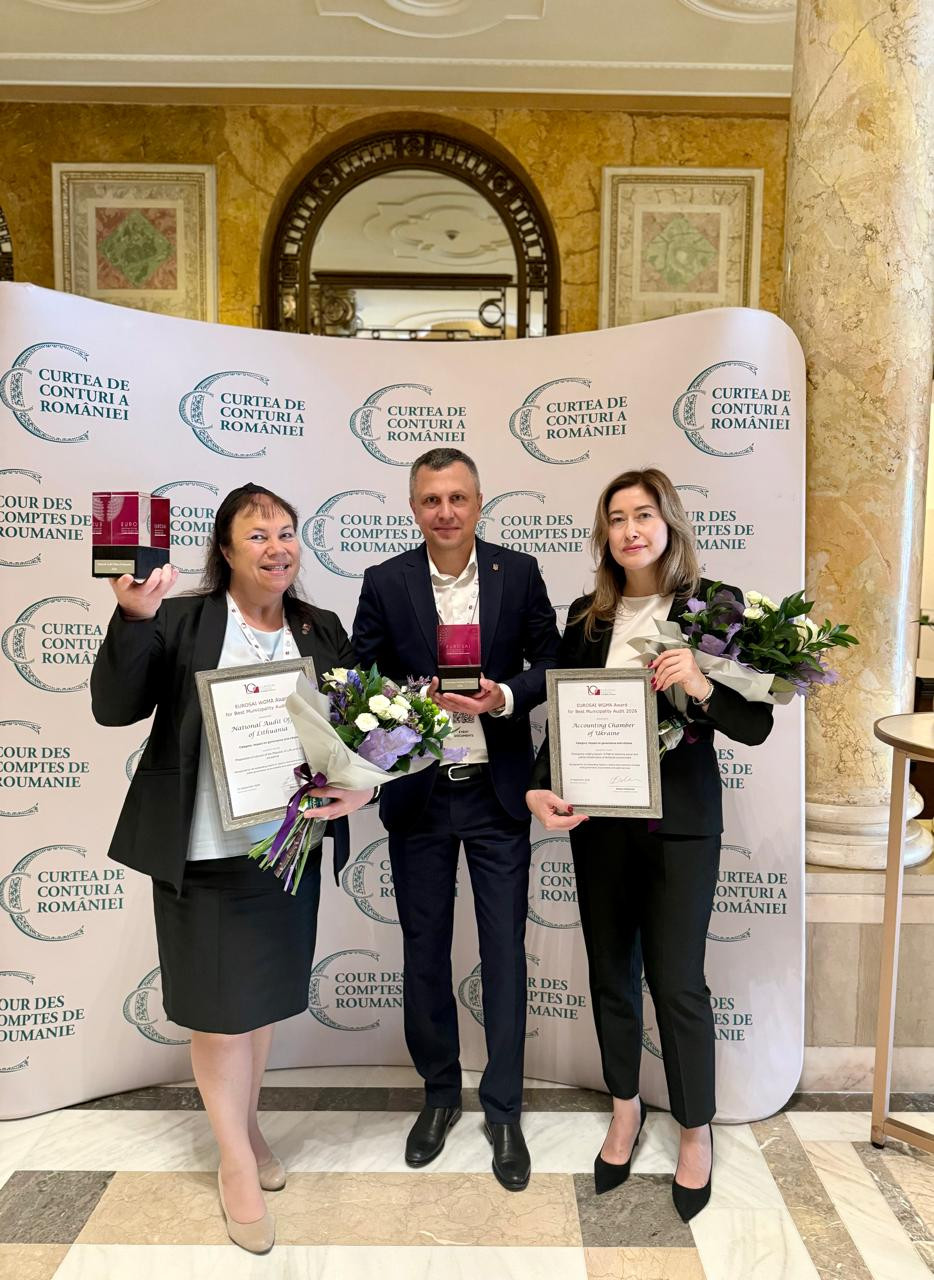
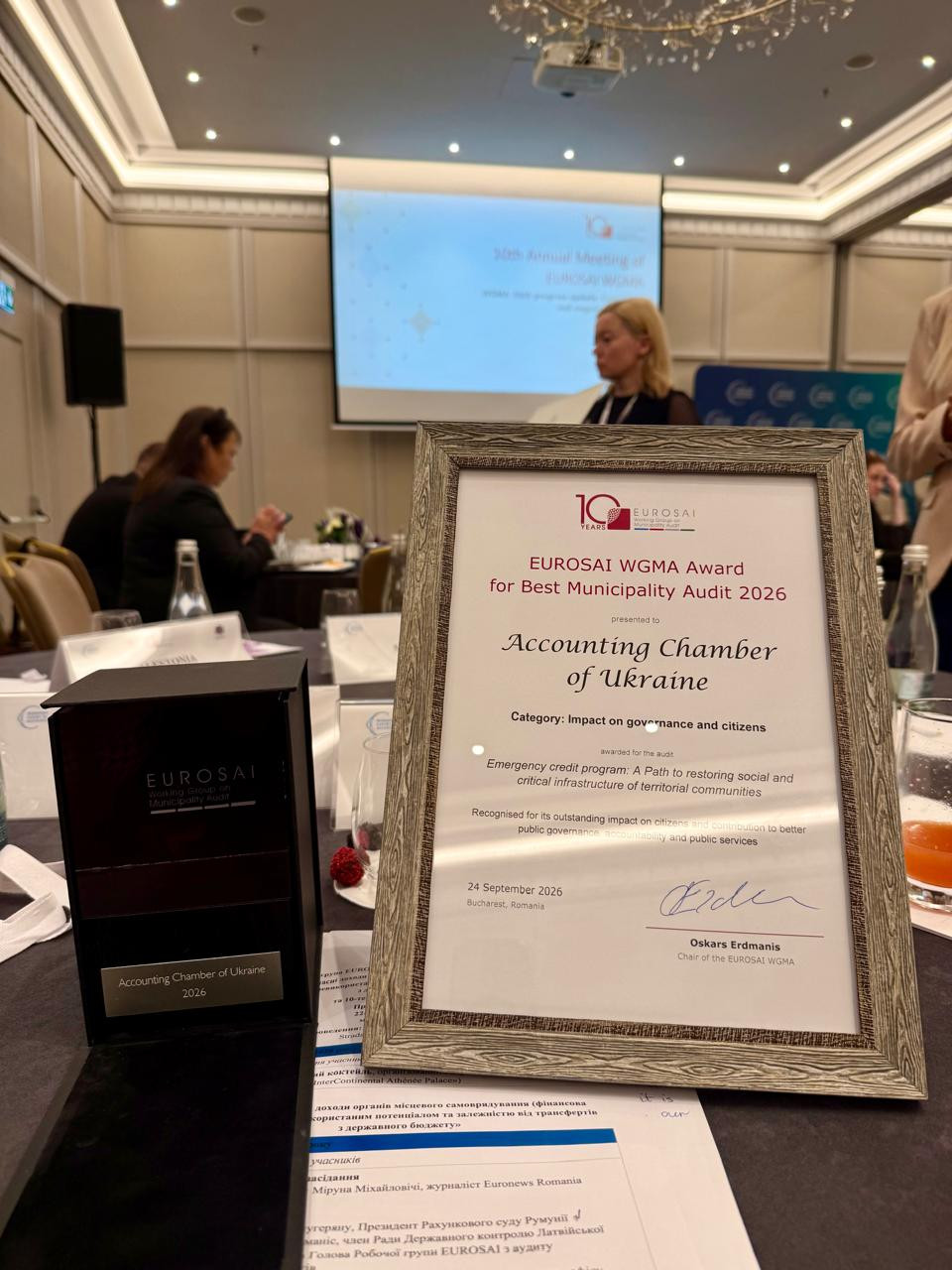
The Accounting Chamber received an award from the EUROSAI Working Group on Municipality Audit (WGMA) for the best municipal audit of 2026 in the category "Impact on Governance and Citizens." The award was presented for the audit titled "Emergency Credit Programme: a path to the restoration of social and critical infrastructure in territorial communities."
The award was presented recently in Bucharest, Romania, during the 10th annual meeting of the WGMA, which brought together 21 representatives from 28 participating countries. The National Audit Office of Lithuania also received an award in this category for its audit of the preparation of citizens for civil resistance.
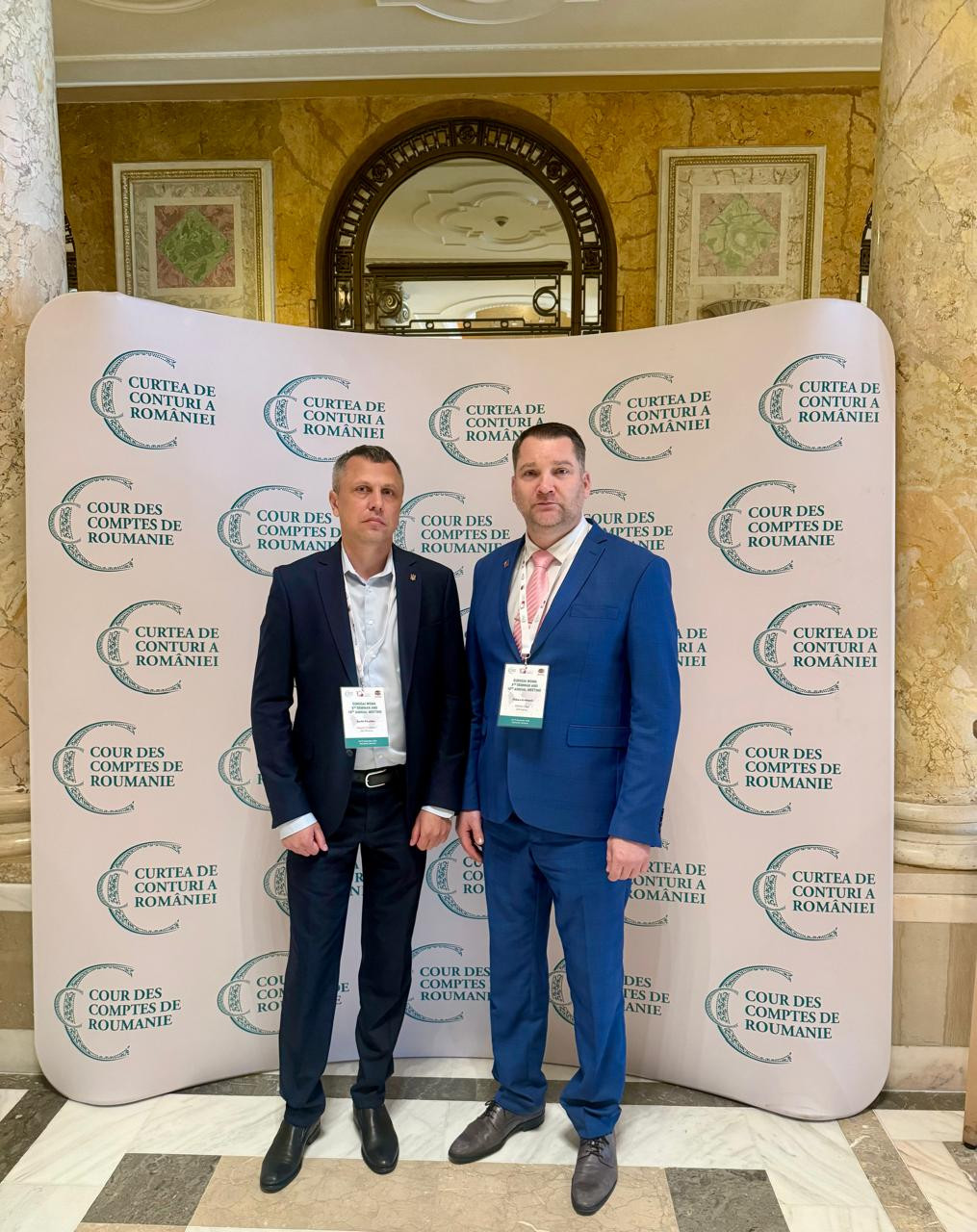
Representing the Accounting Chamber, the events were attended by Deputy Chairman Serhii Kliuchka and Nataliia Fisai, Director of the Department of Control (Audit) in the Area of Intergovernmental Financial Relations, Local Budgets, and Regional Development.
During the 10th annual meeting of the Working Group, the 9th WGMA seminar took place, focusing on the financial autonomy of local self-government bodies. In addition to other topics the participants discussed the own-source revenues of municipalities, the role of local taxes, intergovernmental transfers, and resource management in small municipalities.
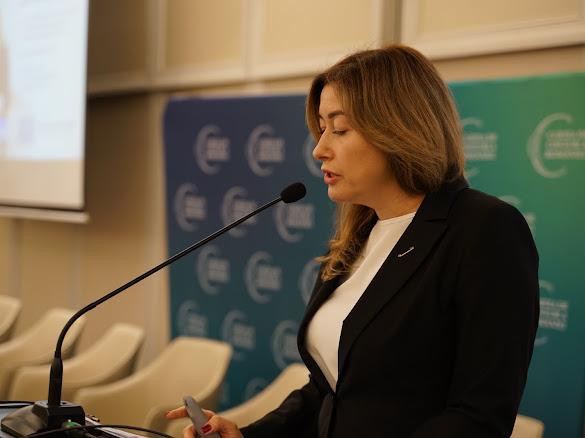
Nataliia Fisai presented the findings of the audit. The auditors assessed the effectiveness of the credit program’s management and identified issues hindering the facilities timely restoration. Twenty-five sub-projects across 16 local self-government bodies were selected for examination, covering 76.7% of the actual cash expenditures for these sub-projects.
The Extraordinary Credit Program is one of the first large-scale international financial assistance programs aimed at the recovery of Ukraine. It has been implemented since 2015, with a total value of €200 million. By the end of 2024, 281 sub-projects had been approved under the program.
The audit revealed systemic shortcomings in the coordination and oversight of the program's implementation. Specifically, 90% of the sub-projects examined experienced delays or fell behind schedule. The auditors also pointed to a lack of transparency in the selection of sub-projects, deficiencies in monitoring and reporting, and irregularities during the procurement and the works execution.
As a result, 64% of the approved budget allocations remained unutilized during the period from 2019 to 2024. Furthermore, €1.4 million was spent on interest payments for servicing loan funds that hadn’t been utilized.
Nataliia Fisai specifically emphasized the importance of applying a comprehensive approach to the audit of relevant programs, which entails the risk-based selection of entities, data analysis, assessment of the management and project selection system, and the use of digital platforms and public registries.
"It was important for us not only to identify shortcomings in individual sub-projects but also to understand why they recur. This made it possible to formulate recommendations aimed at improving the management of the entire program. This approach can also be applied during audits of other international programs and investment projects implemented by municipalities," noted Nataliia Fisai.
During the recent meeting, Chairwoman Olha Pishchanska and members of the Accounting Chamber congratulated the audit team that had received the WGMA award.
Also, to mark the 10th anniversary of the Working Group on Municipality Audit (WGMA),the ninth issue of the “WGMA News” has been released. It features reflections on ten years of cooperation, as well as key achievements and activities of the WGMA. The issue includes two contributions from Ukrainian auditors:
· the article “Audit of Local Budgets: Implementation of the Accounting Chamber’s New Mandate” – regarding the institution’s new powers in the sphere of local budgets auditing, by Nataliia Savulii, Deputy Director of the Department for Control (Audit) in the Field of Interbudgetary Relations, Local Budgets and Regional Development (pp. 11–12);
· the article “Civil Protection in Secondary Schools”, by Nataliia Fisai, Director of the Department of Control (Audit) in the Area of Intergovernmental Financial Relations, Local Budgets, and Regional Development, highlights the findings of an audit regarding the safe conditions establishment in municipal secondary schools (pp. 24–25).