How the State Handles Citizens’ Appeals: the Accounting Chamber of Ukraine Audit Findings

Every year, citizens submit millions of applications, complaints and proposals to public administration bodies. This right is guaranteed by the Constitution of Ukraine. In their appeals, citizens report violations of their rights, raise issues of importance to local communities and society, and expect a clear response from the State. When analysed collectively,these appeals should help public administration bodies identify problems that are becoming systemic and require management decisions.
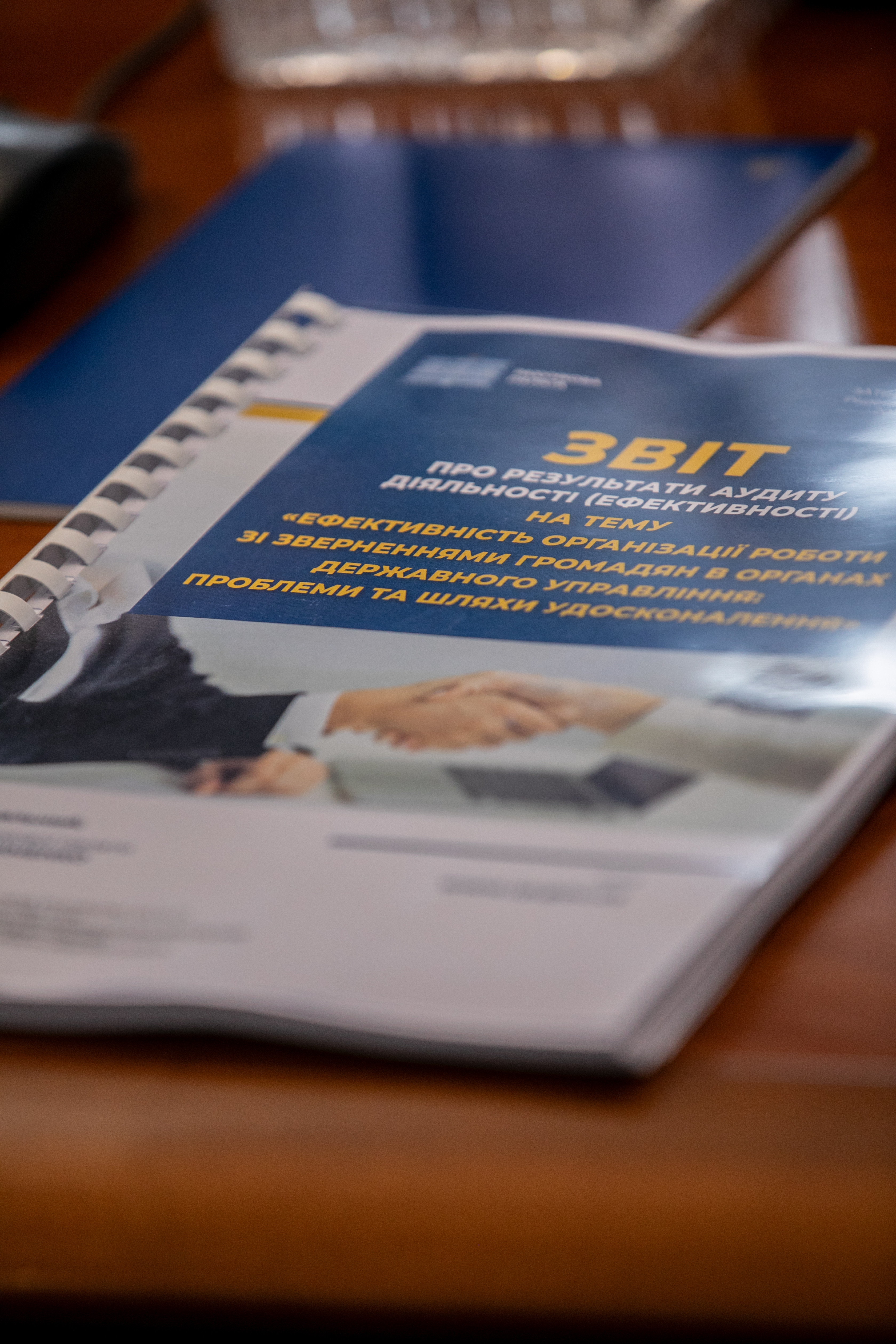
Thus, in 2024, public administration bodies received 3.7 million appeals, while in 2025 the number increased to 3.9 million. During the audit ‘The Effectiveness of the Organisation of Work on Citizens’ Appeals within Public Administration Bodies: Problems and Ways for Improvement’, the Accounting Chamber of Ukraine analysed the system for submitting and processing citizens’ appeals (hereinafter referred to as the ‘appeals system’) and how this information is used in management decision-making.
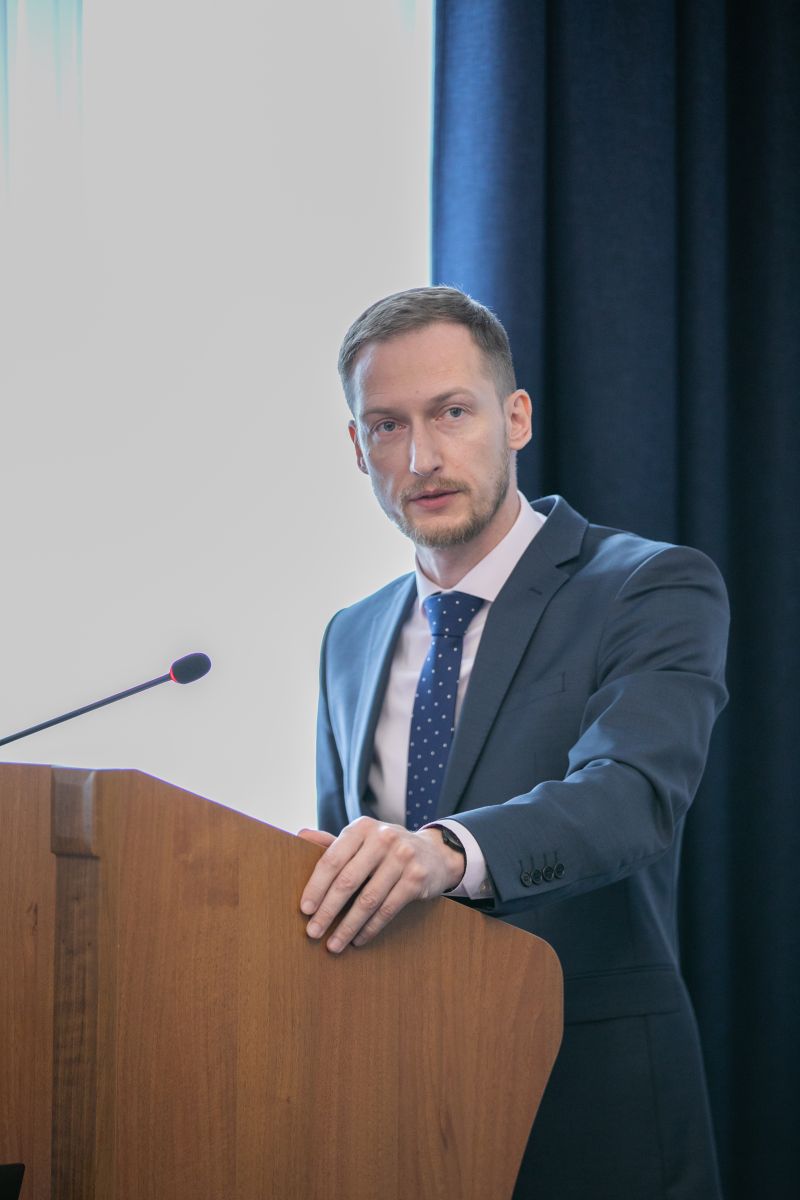
The audit was led by Kyrylo Klymenko, a member of the Accounting Chamber of Ukraine. The audit report was approved at the Accounting Chamber’s meeting on 28 July.
APPEALS SYSTEM
According to the audit findings, Ukraine has not yet established a comprehensive, centralised and citizen-centred system for handling citizens’ appeals. Furthermore, information contained in citizens’ appeals is not used sufficiently to identify systemic problems and inform management decisions.
Reform of the citizens’ appeals system began in 2011, when the Government approved the Concept for the Establishment of a National System for Processing Appeals to Executive Authorities. In 2015, the Government approved the Concept for the Establishment of a National Contact Centre, which was planned to be implemented in 2016–2017. However, the National Contact Centre based on the Government Contact Centre (GCC) was never established. In 2019, the Unified System for Processing Appeals was created, and a transition to processing appeals under a ‘single entry point’ principle was envisaged; however, this approach was not been fully implemented either.
At present, citizens submit appeals both directly to public authorities and through the Unified System for Processing Appeals (USPA). The system facilitates coordination between the GCC, regional and other contact centres, helplines and executive authorities. Due to the uneven integration of public authorities into the USPA, requests are registered and processed in parallel across different systems, resulting in duplication of processes and preventing the establishment of a unified record-keeping system.
RESPONSIBLE AUTHORITY AND UNIFORM STANDARDS HAVE NOT BEEN DEFINED
In total, 7.6 million citizens’ appeals were received through various channels in 2024–2025. According to an indicative audit estimate, public expenditure on maintaining the appeals system during this period amounted to approximately UAH 35.4 billion. Given the scale of this expenditure, the efficiency of the system is particularly important.
The proportion of electronic appeals increased from 38.3% in 2024 to 49.2% in 2025.
At the same time, service quality indicators deteriorated in 2024–2025:
- the proportion of repeat appeals increased from 6.4% to 7.5%;
- the proportion of interrupted calls to the GCC increased from 21.7 to 23.6%;
- the proportion of overdue responses increased from 5.7 to 11.5%;
- citizen satisfaction declined from 67 to 57%.

Overall, the current legal and institutional framework does not ensure a modern and standardised process for submitting and processing citizens’ appeals. Another issue is the lack of a single central executive authority responsible for formulating and implementing public policy in the field of citizens’ appeals. There are also no uniform service delivery standards, comprehensive monitoring of the system’s performance, or systemic use of data from citizens’ appeals in management decision-making.

The legislative framework in this area contains outdated terminology and approaches appeals that no longer reflect current needs and therefore requires updating.
REPEAT APPEALS AND SYSTEM WORKLOAD
In 2024, 239,2 thousand repeat appeals submitted by citizens to public administration bodies were recorded, while in 2025 their number increased to 294,2 thousand. In most cases, repeat appeals indicate that the applicant’s issue was not resolved during the initial consideration, that a response was not provided in a timely manner, or that further clarification was required. In certain cases, large numbers of appeals submitted simultaneously may constitute an abuse of the right to appeal.
For example, among the appeals registered by the GCC in 2024–2025, 24,353 were addressed to more than one reviewing entity, and one appeal, submitted in September 2024, contained 406 addressees. Furthermore, in 2025, 141 citizens submitted a total of 57,127 appeals. This means that, on average, each of them submitted one appeal every day throughout the year.
According to the audit’s indicative estimate, the additional costs associated with processing repeat appeals in 2024–2025 amounted to approximately UAH 2.47 billion. The highest proportion of repeate appeals was recorded at the National Social Service of Ukraine, the Kyiv City State Administration, and the National Commission for State Regulation of Energy and Public Utilities.
This highlights the need to establish legislative mechanisms for managing excessive or duplicate appeals while preserving citizens’ constitutional right to submit appeals.
CENTRALISATION AND AUTOMATION OF APPEALS PROCESSING
A total of 74.2% of public administration bodies use electronic document management systems. At the same time, the level of automation of citizens’ appeals processing varies among such bodies and largely depends on the technical capabilities of the particular system, which highlights the need to introduce a centralised approach.
The USPA has the necessary technical and organisational functionality: the system supports registration, routing, duplicate detection, data processing and automated monitoring of deadlines. Centralised processing of appeals through the GCC demonstrates the potential to reduce the workload on public administration bodies; however, this potential has only been partially realised.
The Government has not yet adopted a decision requiring the mandatory integration of public administration bodies into the USPA. Consequently, a significant proportion of these bodies register appeals in their own systems and apply different approaches to processing them.
According to the auditors’ calculations, the indicative average cost of processing one item of correspondence in public administration bodies in 2025 was UAH 4,678.3, while the average cost of processing one appeal through the GCC was UAH 65.9. This comparison demonstrates the economic rationale for integrating public administration bodies into the USPA.
STAFF SHORTAGES AND STAFF TRAINING
Staff shortages persisted within the GCC and across public administration bodies. Across 1,035 bodies, the number of staff involved in processing appeals incresed from 13,108 in 2024 to 13,752 in 2025, while the number of vacancies increased from 1,912 to 1,998.
Of the GCC’s 439 positions , 282 (64.2 %) were filled at the end of 2024, and 292 (66.5 %) at the end of 2025. The departments directly responsible for processing appeals had staffing levels ranging from 52 to 56.6 %.
The GCC provided initial training to all newly recruited staff. However, performance assessments did not cover all positions, and only 48% of advisers met the set target each month. At the same time, 92 public administration bodies did not provide specialised training, while 494 bodies, or 47.7%, approved professional development plans. Staff shortages and uneven levels of staff training limit the system’s capacity to process appeals in a timely and high-quality manner.
CITIZENS’ APPEALS AS A TOOL FOR MANAGEMENT DECISION-MAKING
Due to insufficient oversight of the action taken by ministrie in response to citizens’ appeals and the lack of requirements to publish the results, the system remains focused primarily on processing individual appeals, while the root causes of systemic problems remain unresolved.
At the same time, the quality of the handling of citizens’ appeals directly affects public trust in the State. A timely, substantive and well-reasoned response demonstrates the ability of public authorities to respond to people’s needs, whereas treating appeals as a mere formality reinforces public mistrust.
Based on the audit findings, the Accounting Chamber of Ukraine issued recommendations aimed at optimising the system and ensuring citizens’ right to impartial, fair and timely consideration of the substance of their appeals. These recommendations are intended to address the following shortcomings:
- uncertainty regarding responsibility for formulating and implementing public policy in the area of citizens’ appeals;
- incomplete implementation of the ‘single entry point ’ system for processing appeals;
- failure to ensure mandatory integration of entities within the appeals system and proper data exchange;
- absence of uniform standards for the service delivery to citizens and data management;
- insufficient use of information contained in citizens’ appeals to provide information and analytical support for management decision-making;
- insufficient staffing capacity at the GCC.
«The system for handling citizens’ appeals in public administration bodies currently operates without a single authority responsible for the policy r, without uniform standards and without proper quality control. It consumes tens of billions of hryvnias every year, yet fails to fulfil its primary function – to serve as an effective channel of communication between the State and its citizens. I hope that implementing these recommendations will enable us to move from a formal system to one that is truly citizen-centred», – concluded Kyrylo Klymenko.
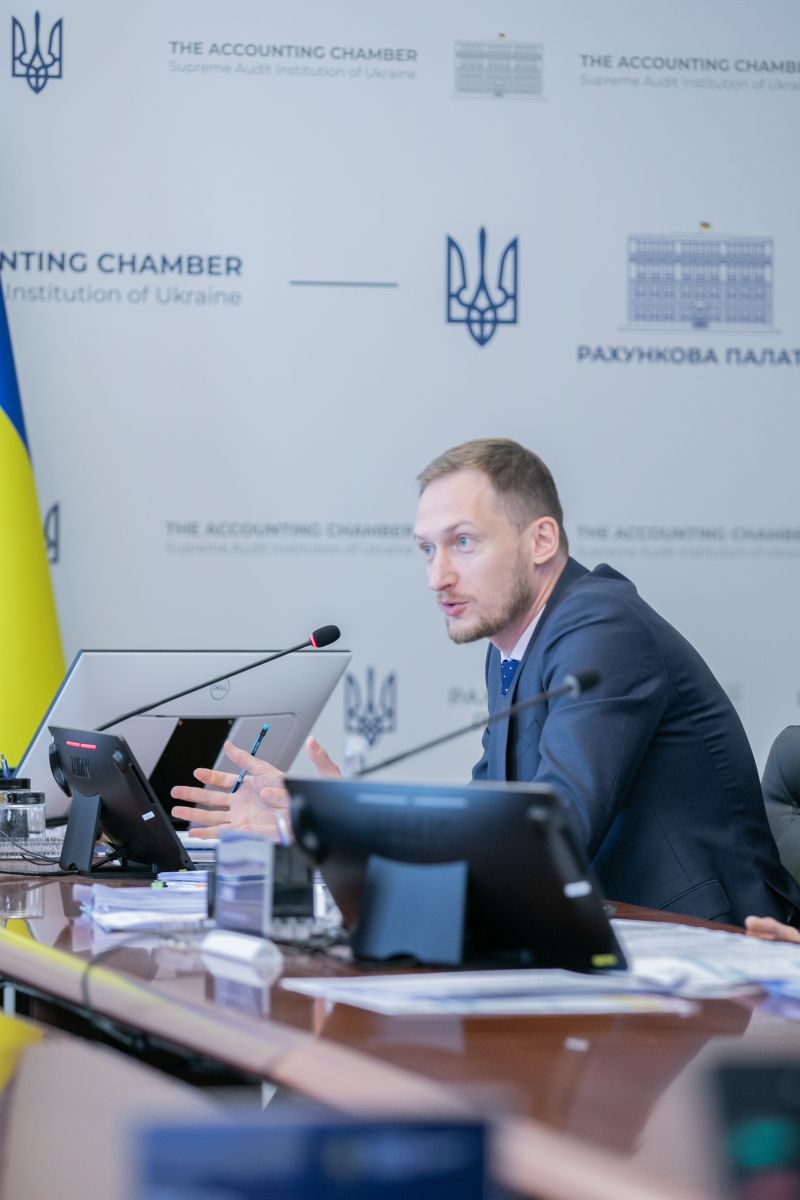
Pavlo Polianskyi, Deputy State Secretary of the Cabinet of Ministers of Ukraine, who attended the meeting, highlighted the importance of the audit as a tool for improving the efficiency of work with citizens’ appeals and noted that the Secretariat had already begun implementing the recommendations.
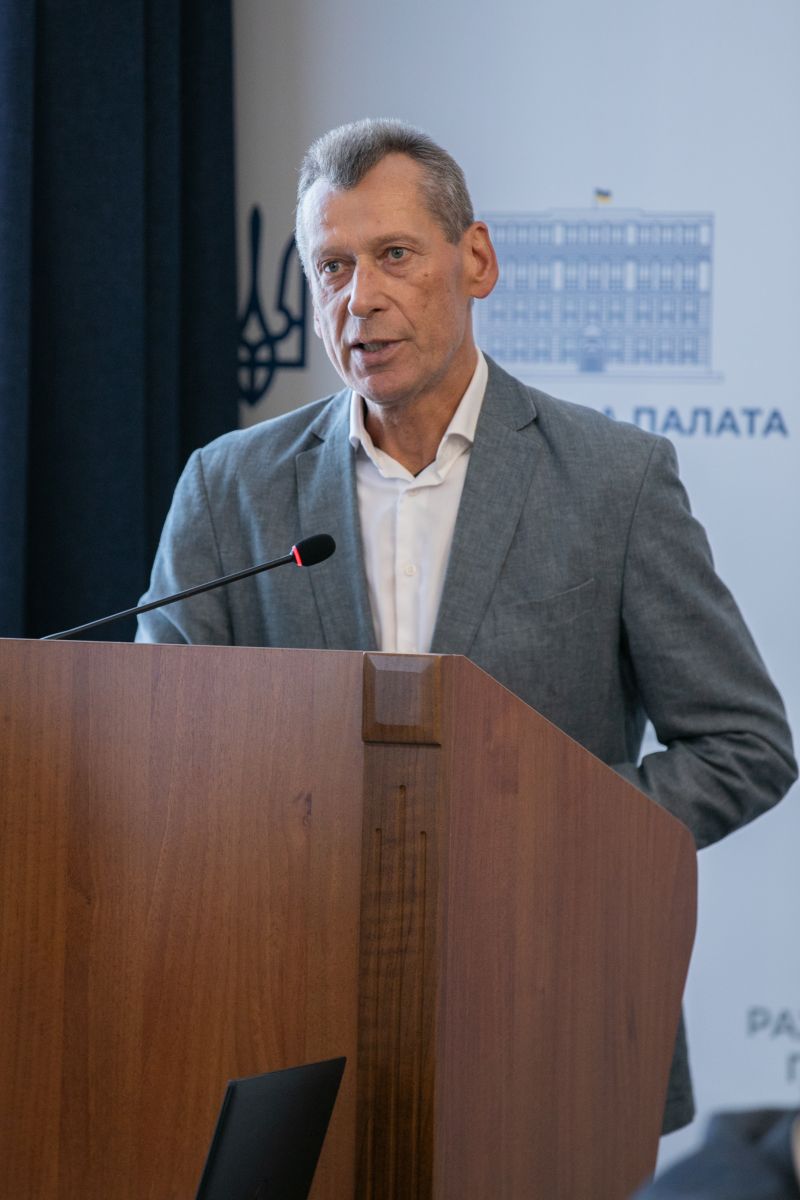
The report and the decision of the Accounting Chamber of Ukraine will be submitted to the President of Ukraine, the Verkhovna Rada of Ukraine, and the Verkhovna Rada Committee on Human Rights, De-occupation and Reintegration of Temporarily Occupied Territories, National Minorities and Interethnic Relations, with a recommendation that they be considered at a Committee meeting, to the Verkhovna Rada of Ukraine’s Commissioner for Human Rights, the Cabinet of Ministers of Ukraine and its Secretariat, the State Institution ‘Government Contact Centre’, and will also be published on the official website of the Accounting Chamber of Ukraine.